
From the world of business and glamour to that of rare genetic disease: A Mom’s resolute journey as India’s torchbearer of Prader-Willi Syndrome


Ansh and his mother Shikha Shikha’s family migrated from Rajasthan to Kolkata several generations ago and set up a flourishing textile business. She had always seen a life of plenty, although tempered with discipline and hard work. She was gifted with great physique, charming looks, and a sharp mind, all of which floored young Vikram whom she met while still in high school. After graduation, Shikha landed a job in a garment export company. She handled the competitive European market which entailed frequent travel, and meeting customers’ expectations. As much as she was enjoying her challenging job, it was soon time to give it up, and get married.
Vikram Methramani belongs to a Sindhi family of Kolkata running a successful garment retail business. Although Vikram joined the family business after finishing college, his heart was not in it. His passion lay in music, especially performing for audiences. Marriage with Shikha was a win-win. Shikha’s formidable administrative skills were the anchor Vikram needed to open his own dream nightclub in Kolkata. Called The MYX, it quickly became a smashing success. Since then, there has been no looking back, and today DJ Vicky Methramani is the most sought-after DJ in celebrity circles, including the Ambanis!
September 21, 2003 - Ansh arrives
Shikha and Vicky along with their families waited excitedly for the arrival of their first baby. Shikha’s pregnancy had been without incidence until the very day that Ansh was born. It was a Sunday, and early in the morning Shikha’s fluid bag broke. The gynaecologist took a long time to respond, and finally the delivery had to be done by caesarean section under general anaesthesia. When Shikha regained consciousness, she naturally wanted to see the baby immediately. Vicky assured her that all was well, but in fact it was not. The baby was in the ICU, on oxygen support. He had cried very feebly at birth, and had suffered birth asphyxia, that is decreased supply of oxygen. He was hypotonic, a floppy infant with poor muscle tone. After 24 hours there was some improvement and the oxygen support was removed. But the baby was not able to take breast feed normally. He was being fed through Ryle’s nasal tube in the ICU. After nine days in the ICU Ansh’s parameters became normal, but feeding was still an issue. Shikha decided to take the baby home at her own risk.

Ansh as a baby.
Not a sound from the baby
To make sure she was feeding the baby adequately, Shikha maintained a strict record of Ansh’s milk consumption. Since he was not able to suckle, she expressed the breast milk and fed it to him dropwise. The whole exercise would take at least 30 minutes, and was repeated every hour and a half. They had no way to know whether the baby was hungry because Ansh simply never cried. After one month they started feeding Ansh with a spoon, as he still lacked the strength to suckle or take bottle feed. At four months they introduced solids and he started gaining weight. Encouraged by his response they started over-feeding him, little knowing what a mistake that was. Ansh would be sleeping most of the time, was very floppy and even lacked eyeball control. In spite of gaining weight, Ansh remained inactive. Yet, his paediatrician assured them that he was just slow in his development and would catch up gradually.
A mysterious fever grips Ansh
When Ansh was six months old, Shikha and Vicky decided to visit the much-revered Vaishno Devi temple in Katra to seek the Goddess’ blessings for their dear baby. They were away for four days, leaving Ansh in the care of their family. During this time there was a family function, and Ansh too had an outing with the family. After this outing Ansh came down with a fever. He didn’t look ill, but his body was warm.
On her return Shikha took Ansh to the doctor. The fever was real, but routine tests did not reveal the likely cause. He was then admitted to the hospital where doctors began a battery of tests to arrive at a diagnosis. Suspecting meningitis, they extracted some fluid from the spinal cord, a particularly painful procedure. That was the first time Ansh, who had never cried so far, gave out a full-throated scream. The test came out negative, and the source of the fever remained a mystery. To Shikha’s horror some junior doctors began wild speculation. One of them suggested casually it could be leukaemia, possibly because the baby had wailed so hard that thin red streaks had appeared in the baby’s fair cheeks.
Fortunately, the senior paediatrician, Dr. Manzur Quader, was a very upright professional. He admitted that they were not on the right track and needed to consult other experts. He himself called Dr. Apurba Ghosh, a very renowned senior paediatrician to come to the hospital and examine Ansh.
By then the baby had been with the fever for three weeks. The first thing Dr. Ghosh did was to take off all blankets covering Ansh, and pump up the air conditioning. Within half an hour the fever dropped. Dr. Ghosh’s verdict was that the baby had a problem with thermoregulation. It was peak summer and his body could not adapt to the heat exposure.
Dr. Quader, a God-send for Ansh
The ordeal of the fever was behind them. The gain to Shikha in this episode was the discovery of Dr. Quader, such a humble and compassionate doctor with so much wisdom. Her heart was full of worries. Ansh was eight months old, but by no measure was he reaching the expected milestones. She sought Dr. Quader’s advice. He shared her concern, and admitted that he was not able to lay his finger on what could be ailing Ansh. It was not a condition he had encountered before. There was something they were missing. “So would it be worthwhile to take Ansh to the USA for examination?” Shikha asked. Her sister and brother-in-law were both doctors, practising in USA. They had been pushing Shikha to bring Ansh to the US, but her family, including Vikram were not so sure it would help. Dr. Quader counselled them and convinced Vikram that there was a good chance of getting diagnosed if they took Ansh to the US. This was the assurance Shikha desperately needed. She now packed her bags for the US trip.
June, 2004: Diagnosis in USA
In the US, Ansh was examined by two different paediatricians. None of them could arrive at a firm diagnosis. There could be several different options, of which Prader-Willi syndrome (PWS) was one possibility. Shikha then saw Dr. T.K. Kulasekaran, an Indian-origin paediatric neurologist (trained at CMC, Vellore), practicing in that area (Akron Hospital). He immediately recognized the condition as PWS, and arranged to get the confirmatory diagnostic test of DNA methylation done at subsidized cost. The test came out positive.
What is PWS?
PWS is a complex genetic disorder with a prevalence of 1:10,000 to 1:30,000, accounting for 350,000 to 400,000 affected individuals worldwide. Both sexes are affected.
Symptoms and clinical features of PWS
PWS is a spectrum disorder with symptoms varying in severity, and changing over the lifetime of the individual. There may be respiratory difficulty at birth. Infants generally have poor muscle tone (hypotonia) leading to poor sucking reflex and feeding problems. Babies tend to sleep a lot, and crying is feeble. They may have distinct facial features like almond-shaped eyes, narrow forehead, and thin upper lip. Hands and feet may be unusually small. The sex organs are poorly developed (hypogonadism).
Abnormal food craving and lack of satiety (hyperphagia), a symptom typical of PWS generally starts from early childhood and continues throughout life. Hypotonia generally improves at 18-24 months. Enhanced appetite may start between two to five years, and marked hyperphagia may set in by eight years of age. Excessive eating may lead to obesity and type 2 diabetes.
Hormonal problems include low levels of growth hormone, resulting in short height, low muscle-mass and high fat. Thyroid hormone may also be insufficient. Speech and motor skills are often delayed and there may be mild to moderate cognitive impairment. Children and adults could have serious behavioral problems, including temper tantrums, stubbornness, and manipulative behavior, especially when denied food. Individuals may show intense emotional dysregulation and self-injurious tendencies. They may not adapt easily to changes in routine, have excessive anxiety, and show abnormal behavior like skin picking. Other symptoms include hypopigmentation making them lighter in complexion than other family members, dental and vision problems, and low bone density.
Hypothalamic/pituitary involvement results in temperature instability and problems controlling the body temperature (infection could go untreated due to no fever, and may be fatal), high pain threshold, an aberrant sleep cycle, and sleep apnoea.
Genetics
PWS is caused by a defect in chromosome 15 in the 15q11-q13 region. The maternal genes in this region are normally silenced due to imprinting, and paternal genes are essential for normal development. In about 60% of PWS individuals the paternal chromosome suffers a deletion of 15q11-q13, hence no active copies of the genes located in this stretch are inherited. In about 35% cases the paternal copy is not inherited at all due to maternal disomy. In other cases the paternal genes, though inherited, are not expressed due to various mechanisms. Most cases occur sporadically, with the chance of a second baby with PWS being <1%. Symptoms and disease progression may vary depending on the nature of genetic defect.
PWS is basically a disorder linked to imprinting where maternal genes are silenced by DNA methylation and paternal genes are absent. The missing gene products are involved in growth, neurodevelopment and hormonal regulation. However, none of the protein-coding genes in the 15q11-q13 region seem to be responsible for the PWS phenotype on their own. Only the SNORD116 cluster that codes for small nucleolar RNAs seems to be directly linked, as microdeletions of just this cluster result in the main clinical features of PWS.
Diagnosis
The major clinical diagnostic criteria include- infantile hypotonia, feeding problems and failure to thrive in infancy, excessive weight gain between 12 months and 6 years of age, characteristic facial features, hypogonadism, global development delay, and hyperphagia.
Confirmatory genetic testing is required, which includes DNA methylation analysis; and detection of the chromosome 15 deletion or other chromosome 15 anomaly. DNA methylation status can be tested using Methylation-Specific Multiplex Ligation-Dependent Probe Amplification (MS-MLPA) approaches. In 99% PWS cases the methylation test is positive. The deletion status of paternal chromosome is next tested by fluorescence in situ hybridization (FISH) analysis, or other methods like Droplet Digital PCR. If no deletion is found, maternal disomy is checked using methods like chromosomal microarrays with SNP and CNV probes. If this too is negative, tests are done for imprinting centre defect.
Treatment
The only FDA approved treatment for PWS is recombinant growth hormone (GH). Clinical trials with GH have shown improved growth, body composition, bone density, and motor development, and a high safety profile. It is recommended that GH therapy should be started between three to four months of age. Initiating the treatment in adults can also improve body composition, physical performance, and quality of life.
Pharmacologic treatments for hyperphagia and obesity, including GLP-1 receptor agonists, and ghrelin analogs, have not shown consistent results. Diazoxide choline seems to be showing promise for the treatment of hyperphagia.A clinical study was conducted in 2024 to study the effect of diazoxide choline extended release tablet (DCCR) on hyperphagia and other complications of PWS. The drug works by decreasing insulin release from the pancreas and increasing glucose release by the liver. Using the Hyperphagia Questionnaire for Clinical Trials score, the study reported significant improvement in hyperphagia, and also in aggression, anxiety, and compulsivity. Disease severity was reduced as assessed by clinician and caregiver feedback. Although treatment-related adverse events were reported, the drug was generally well tolerated.
In March 2025, Soleno Therapeutics announced FDA approval of diazoxide choline for the treatment of hyperphagia in people with PWS. However, it can have severe side effects like pulmonary hypertension and heart failure. DCCR is also being tested for anti-obesity in PWS.

Ansh growing up
For Shikha: an ocean of confusion and doom
The doctor explained to Shikha that PWS was a neurological disorder that could lead to life-threatening consequences. It was a compulsive eating disorder in which the child could not stop eating. Shikha was left utterly confused. How was that possible? Ansh was under-weight at birth, weighing just 2.5 kg. They had struggled to feed him well so that he could gain weight.
All alone at home, while her sister and brother-in-law were busy in their clinics, Shikha allowed herself to sink into depression. Incessant crying for a week was her response to the dire predicament she was in. Instead of offering her a shoulder to cry on some more, Shikha’s sister gave her a sound scolding. This was unbecoming of an educated woman. You should google PWS and learn everything about it. In this game of cards, you have been dealt your hand by the Almighty. You must deal with it. You should pass happy vibes to the little angel who has no idea what lies ahead for him.
Only a sibling can wield such authority! In retrospect Shikha is ever grateful for her sister’s firmness. Once on the internet, Shikha learnt about the international PWS patients’ advocacy group and sent them an email. In no time she got a response from the US PWS group who work closely with the international group. They were very excited to hear from Shikha because, although they work with PWS children all over the world, they had no contacts from India so far. Ansh was first on their list.
Many things suddenly started falling into place. The US PWS group were having their annual conference soon. The venue was just two hours’ drive from Shikha’s sister’s place. The organizers offered to cover stay expenses for the two-day meeting to facilitate Shikha’s participation. And so, not knowing what to expect, Shikha took Ansh along to attend her first PWS meeting.
So much positive energy despite a bleak future
It was a complete revelation. The hotel where the meeting was being held was full of PWS children of all ages- from babies to older kids. It seemed so reassuring to know that she was not alone. An excellent daycare facility had been set up to take care of each child so that parents could freely attend the meeting. Without having to worry for Ansh, Shikha attended all the sessions and lapped up every piece of information.
She learned about the deletion of chromosome 15 that causes PWS. Parents were urged not to blame themselves for it- a phenomenon clearly beyond their control. Shikha felt as though they were reading her mind. All the issues that had been weighing on her mind were being verbalized here. One session was titled ‘Why me?’, a question Shikha was living with for a while. The answer provided by the speakers was- it has happened to you for a purpose. Find that purpose and your suffering will go. This perspective gave Shikha a sense of peace, and a quiet resolve.
At the end of two days, Shikha was a changed person. She had received a warm welcome by the community, being the first Indian parent in the group. The feeling of helplessness was disappearing as she was now becoming part of a larger family. She was learning from other parents how to manage her child. Further, the group leaders offered her all support to start a PWS patients’ group in India. Shikha felt she had found her purpose.
Providing the right care to Ansh
A major benefit Shikha accrued from the meeting was learning the right way to take care of her baby. She had been mostly doing it all wrong so far. Since Ansh was under weight and floppy, they had been feeding him high-calorie, high-protein food. He was lying around all day long, and they did little to get him some exercise. Now they started including vegetables in his diet. He regularly spent time outdoors in the park. A physiotherapist guided them about physical activities for Ansh, and gave them a video of the recommended exercises which Shikha could follow. Those three months that Shikha spent in USA were totally transformative. When they returned home, the family could clearly see the difference in Ansh. He was now quite an active baby.
Back in India: Shikha’s resolve to embrace PWS
The US trip had been like a crash course for Shikha. Once back at home, she started mentally unpacking all she had learnt and began putting it into practice. Ansh was now 11 months old. His typical day was full of activities. He would have 3-5 physiotherapy sessions daily. Shikha would read to him, talk to him and keep him engaged and stimulated. He even went to a play school for a few hours daily, to be with other children. Ansh could now roll on the floor and was trying to hold up his neck. Seeing these positive results, Shikha resolved to devote full time to PWS, find other parents of PWS babies and share her knowledge with them. No other PWS mom should have to go through what she did!
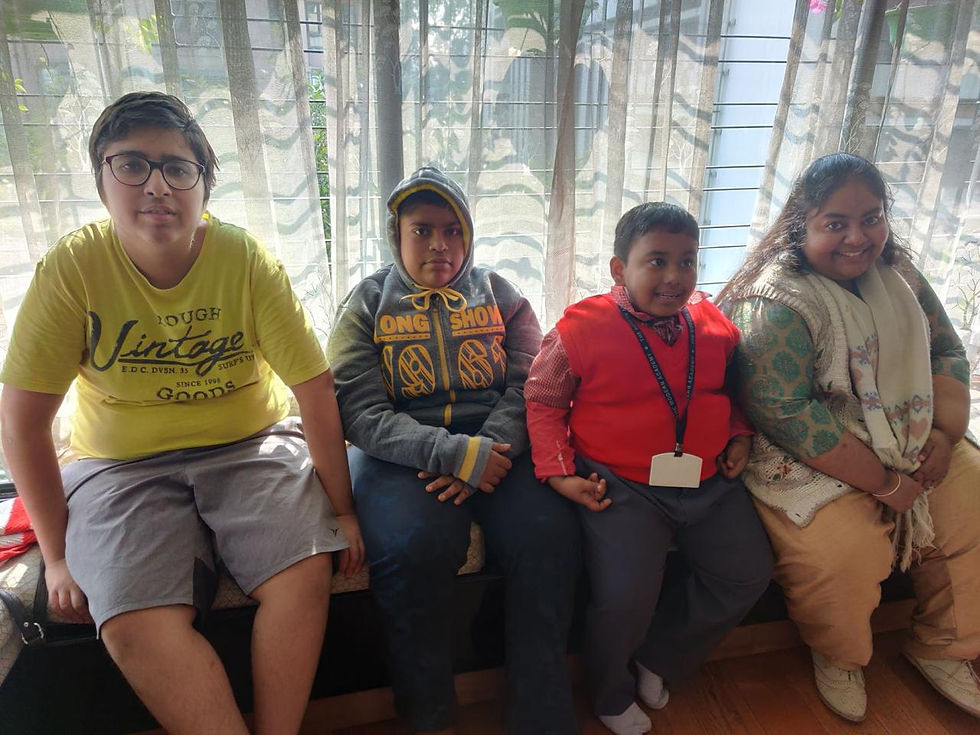
Ansh with PWS children
Spreading PWS awareness in India: engaging with clinicians
The first challenge was to find PWS parents. Ansh had been examined by some of Kolkata’s top paediatricians, but none had suggested PWS as a possible diagnosis. If doctors themselves were unaware of this disease, how would she ever find the patients. She needed to spread the word amongst doctors.
Shikha visited Dr. Apurba Ghosh, the senior paediatrician who had successfully treated Ansh during his mysterious fever. When Dr. Ghosh learnt about the PWS diagnosis he was filled with remorse. Why did it not occur to him? Of course, Ansh had all the typical symptoms of PWS. He was very light-skinned with grey eyes and brown hair, a common symptom of PWS as it affects pigmentation. He had almond-shaped eyes, low birth weight, severe hypotonia and failure to thrive- all of which fit into the diagnosis of PWS. So how did the diagnosis get missed? Being the thorough professional that he was, Dr. Ghosh took this lapse very seriously. He realized that he missed the diagnosis because he hardly saw any patients of this rare disease. He immediately resolved to conduct a continuing medical education (CME) workshop on PWS in the hospital where Ansh was born. All the doctors who had treated Ansh were present in the workshop- the one who had told Shikha not to worry about the delayed milestones, the one who had casually suggested Ansh’s fever could be due to leukemia, all were there. Dr. Qadir who had always supported Shikha was also there. Ansh was there too. The CME met its goal of making a lot of paediatricians aware of PWS. It also earned Shikha a lot of respect from the doctors. She had taken her first steps towards PWS advocacy!
A lonely road lay ahead
Advocacy meant being in the public eye, admitting to the world that Ansh had this debilitating rare condition. At home this caused great discomfort to the family. Vikram’s parents were prosperous people and in their close social circle everyone flaunted perfection. Genetic disease, on the other hand, was considered a blemish. It would tarnish their image. Why announce it to the world in this manner? Better to keep it under wraps.
But Shikha would have nothing of it. She refused to accept this disease as a blemish. She had learnt how to manage the disease, and she must help other patients. In time she did begin to realize, though, that one’s good intentions were no shield from the casual cruelty of the world. It so happened that a one-year-old baby, weighing 20kg, had choked to death due to over eating. His postmortem diagnosis revealed PWS. This unfortunate event was covered by the local press. After the CME on PWS, Shikha had gained prominence and was contacted by the reporter covering this case. To add juice to his story he reported that rich people could go to the US and get their children treated, while babies from poor families were left to die! Such insensitive remarks infuriated her family, but Shikha remained undeterred.

Ansh and Shikha Campaigning for Rare Diseases
The birth of Indian Prader Willi Syndrome Association (IPWSA)
Meanwhile, Shikha received an email from the US PWS group. They had been contacted by another PWS family- the second from India. The baby was being treated at Sir Gangaram hospital in New Delhi which had a very strong medical genetics group under the leadership of Dr. I.C. Verma. Rohit, the father of the second PWS baby knew another PWS family from New Delhi who were also visiting Dr. Verma. Back in Kolkata, Dr. Ghosh had started sending older and current PWS patients to Shikha to help with confirmed diagnosis of DNA methylation with the help of her U.S. contacts. The Indian PWS community began to swell. It gave Shikha the incentive to team up with Rohit and a few other parents to start a PWS advocacy group, and bring patients under one umbrella. Other positive developments followed. Dr. P. Raghupati, a paediatric endocrinologist from Bengaluru was keen to study PWS. He contacted the international PWS group who gave him Shikha’s contact. Dr. Raghupati invited Shikha to participate in the Indian Paediatrics Conference (PEDICON) which, in that year (2009) was being held in Bengaluru. The fledgling Indian PWS group manned their own stall in this massive conference of paediatricians. They got enormous support from the international PWS group who sent them PWS brochures for distribution, and also sent a representative to speak about PWS in the conference. Most doctors visiting their stall were surprised to hear about this rare disease about which they knew close to nothing. It catapulted Shikha and the PWS group to prominence. Soon more doctors started referring patients to them, and their community started growing steadily. They continued to regularly hold their stalls in the annual PEDICON meetings, and Endocrine conferences.
By 2010 they had gained sufficient strength to register the Indian PWS Association (IPWSA), and host their own conference in Kolkata. Vikram raised the funds by organizing an event and donating the proceeds for the conference. Several top paediatricians attended the conference. About 14 families from various cities attended. It took the covid pandemic to swell the number of families rapidly as people took avidly to social media. Their parents’ group grew from 60 in 2020 to its current strength of 300.
Apart from increasing PWS awareness amongst doctors through regular conferences and medical seminars, and counselling the families, IPWSA is helping patients’ families in multiple ways. The National Policy for Rare Diseases, 2021 provides assistance to patients of selected rare diseases (fortunately, PWS is included in this list) through specially designated centres of excellence (CoE) located in a few government hospitals. A lot of patient families are totally unaware of these facilities. IPWSA is helping families to link with CoEs and obtain treatment for growth hormone free of cost. However, once these children are admitted for growth hormone treatment, the hospital finds it difficult to discharge many of them who have serious respiratory issues and need a BiPAP or CPAP machine. The parents are unable to purchase the machine due to financial problems, prolonging the child’s stay in the hospital. In such cases IPWSA steps in and provides the machine. This one step greatly helps the government hospital to discharge the patient. In turn, the hospital is encouraged to include more PWS patients for the growth hormone treatment, a win-win for all concerned.
The stress of care-giving: how to shield one’s marital life from the constant strain
The first international PWS conference that Shikha attended in USA in 2004 gave her a liberating perspective on PWS, and allowed her to accept, own and embrace the disease. Vicky had not received such an exposure. To him the disease was like an external entity, a grave misfortune, that somehow had to be endured. Shikha wanted that she and Vicky should be on the same page about PWS, which could best be achieved if Vicky, too, attended one of the international PWS conferences. The chance came in 2006 when a conference was organized in USA to discuss about care-giving for PWS, and the strain it could sometimes cause in a marriage. Shikha and Vicky, along with Ansh attended this meeting. Once again, speaker after speaker made Shikha feel they could read her mind, and all the issues she was facing were being verbalized and discussed. The demands of care-giving could begin to strain a marriage, as happiness eludes the couple. They start living in guilt for what they think they have passed on to their baby. The conference speakers provided the much-needed balm to soothe such thoughts. Parents should stop blaming themselves. They needed to be happy to be effective care-givers. They must shed off the victim mentality, and maintain a sustainable social life. An occasional outing, leaving the child with another care-giver is OK. If the child over-eats on such an occasion, you can manage it later. But those few private moments are needed for your own rejuvenation.
The conference had the intended effect on Vicky. He understood the importance of Shikha’s mission to help other parents, and to spread awareness about the disease. His own professional work is in the fast-paced world of glamour and show-biz that has no room for ‘imperfection’. The world of Ansh, his darling son in whom he finds his greatest joy, couldn’t be further apart. After this conference Vicky found the inner strength and peace to straddle both worlds with ease.
Growing up with PWS: Ansh’s story
After their return from the US in 2004, Shikha had structured Ansh’s day to get him the required nutrition, exercise and social contact. At 11 months he started going to playschool to be with other babies for a few hours. In the evenings he was taken to the park to savour his surroundings. He was a lethargic baby. Shikha had to hold his hands and help him with all activities. But it gave him great joy and he readily participated. Had he been put on growth hormone, he might have fared better. But doctors in India believed that growth hormone should be given only if the child shows significant growth deficiency. Ansh's height gain was satisfactory, hence the hormone was not prescribed, although Indian doctors are now following the international guidelines and prescribing growth hormone within a few months of birth.
Right from two years of age Ansh had begun to show abnormal interest in food, and hyperphagia was gradually kicking in. Apart from strictly controlling food intake, Shikha’s main focus was on Ansh’s development milestones, for which occupational therapy was essential. Finding a therapist in Kolkata who was familiar with Ansh’s condition proved a challenge. From her experience in the USA Shikha knew what to look for in a therapist. She found such persons in Mumbai who could give him the correct exercises and speech therapy. Twice a year she would take Ansh to Mumbai for two weeks so that he could get the right treatment. On one such trip to Mumbai, as Shikha was out in the park with Ansh, he took his first step. He was actually walking!! He was a year and nine months old. With tears of joy Shikha called her mother-in-law to break the news, but she had to savour this momentous milestone all alone. Shikha had been very athletic, making it to the national levels in rugby, and club level in swimming. With her swimming acumen she taught Ansh to swim early, which also helped improve his muscle tone.

Ansh; the artist at work!
The beginning of epilepsy
From the time Ansh was a year old they found that any episode of fever was followed by febrile convulsions. They became very cautious and didn’t allow his temperature to rise. But soon they discovered that the convulsions were not limited to rise in body temperature alone. Their doctor in Mumbai prescribed a medication, but it was not particularly effective. They decided to take Ansh to Gangaram hospital in New Delhi where a number of PWS babies were being treated by a team of endocrinologists and neurologists. Dr RK Sabharwal, being familiar with PWS, diagnosed the type of epilepsy Ansh was suffering from and prescribed the specific medicine which worked. The seizures started decreasing in frequency, and after a few years of regular follow ups and treatment, Ansh was finally free of seizures.
Shikha: slowly re-wiring her own life
Taking care of the multiple issues that affect a PWS child needs full-time attention, and one parent has to be always alert and available. Till Ansh was five years old Shikha had cut herself off completely from all her professional and personal activities. Her life fully revolved around Ansh.
By the time Ansh was five, Shikha had put in place the various therapies, including physical- and speech-therapy for Ansh, and had gained enough confidence and knowledge about ways to handle issues that may crop up. She could now train other caregivers at home and delegate some of the care to them. At that time her husband was running his garment business, while performing events on the side. She began supporting him in the garment export for international customers, and accompanying him on business trips.
Ansh: from toddler to entrepreneur; an eventful journey
In a way, Shikha’s getting back to work helped Ansh to become more independent. The epilepsy medicine was also helping him and the seizures were under control. It was now time to send Ansh to school. They were fortunate to find one school in Kolkata (Akshar School) that offered integrated schooling to both normal and special needs children. Ansh completed his entire schooling from kindergarten to class 12 in this school. With closely supervised meal times, he was managed well at school. The friends he made in kindergarten are his best friends for life. They are a group of eight boys and girls afflicted by a range of disorders including autism, Down’s syndrome, ADHD etc. Since they bonded so well together Shikha took the initiative to form a ‘Buddy group’ for them. Other moms also joined in and they started taking turns to organize periodic outings for these children. Today they are young adults, and the buddy group still thrives. Recently, Shikha started a Zumba class for them twice a week, which they are enjoying thoroughly. Three days a week at 9.30 pm they all meet through video call and laugh their hearts out- arguably the best therapy of all!!
May 2018: Major behavioural problems
PWS children characteristically exhibit a range of behavioural problems. They suffer from constant craving for food, which leads to abnormal food seeking behaviours and violent tantrums when denied food. They could be stubborn and manipulative, or perform repetitive actions like skin picking and scratching to the point of wounding themselves. Such aggressive actions tend to increase as the child approaches puberty.
Shikha had been managing Ansh very well by constantly keeping him engaged, and strictly monitoring his food intake and food-access. Obesity is a common challenge in PWS due to excessive eating, but Ansh had so far remained unaffected under the watchful eye of Shikha.
This was about to change, albeit due to a happy circumstance. In 2017, Shikha realized that she was pregnant. It was not planned, as they had decided to devote themselves fully to caregiving for Ansh. The news was thus, both exhilarating and unsettling. Shikha had just about woven her routine around Ansh, to fit in some of the activities she enjoyed. Her rugby had picked up. Vicky was professionally progressing and was travelling a lot. Could they really manage to bring up a second baby. It was a tough call. The PWS parents in their group were always blessing Shikha as she was like a God-send for them. Shikha attributed this unplanned pregnancy to their blessings. God had willed for Ansh to enjoy the company of a ‘normal’ sibling, and she decided to go ahead with it.
However, there was always a small chance of the second baby also having PWS. The thought terrified Shikha. Fortunately, her gynaecologist was extremely supportive. He read up all about PWS, and the FISH diagnostic test to detect the disease. The plan was to check the foetus at 5 months by amniocentesis and discount the chance of PWS.
When the time came for amniocentesis, however, Shikha froze in panic. What if the needle pricked her baby and caused damage? Finally, Vicky had to distract her with anecdotes of their happy vacations. She relaxed and the fluid was collected.
The next challenge was to muster the courage to receive the test result. What if? The doctor was to relay the result over the phone. The entire family gathered to receive this phone call together, a prayer in their hearts. Even the sister from USA was on the line. The doctor’s calm voice came on, congratulating them. All was normal! On this end of the line the tears were unstoppable.
The baby was due in May 2018. Shikha, otherwise fondly called ‘helicopter mom’ as she was constantly on the move, was forced to take a back seat during the pregnancy. Ansh’s care-giving slowly declined. He began eating too much as he had easier access to food. Although he was excited about the arrival of a sibling, once Reyansh was born, he began to miss the undivided attention he was accustomed to. The typical behavioural issues of PWS began to kick in. He would scratch his skin incessantly, with blood oozing out of open wounds. Then one day he went to the toilet and, on a whim, shaved his head completely. It was clear that without close monitoring Ansh could seriously injure himself. They were especially careful if he took too long in the toilet, as he had also begun rectum picking, another common behavioural issue in PWS. Due to hypotonia their muscles are weak and they feel they have not cleared their rectum. Most of it is psychological. Ansh was started on laxatives, which helped, but did not completely stop his rectum picking. They began encouraging him to take his tab to the toilet so that his hands, and mind, would be occupied. With such measures he slowly improved.

Ansh with his brother Reyansh
2020: Covid pandemic
The lockdown during the pandemic proved helpful. Shikha could devote much more time to Ansh. They would work out together at home. His food intake became regulated and he began to lose weight. However, all the gains were lost in the later pandemic wave when both Shikha and Vicky came down with covid infection. They had to be in isolation for two weeks. Ansh began eating junk food all the time. To bring him back on track became an uphill task. He would become extremely aggressive and start stealing food.
2022: testing times
Shikha figured she could possibly temper Ansh’s aggression by involving him in her social events. In September 2022, on his 19th birthday, she took Ansh with her to distribute food to poor children. She thought he would enjoy the sense of participation, but all he saw there was the food- large quantities of it being served to the children. If only he could dive into all that rice! The frustration triggered massive aggression in him.
Many PWS parents, unable to handle the aggressive behaviour of their grownup children, had moved them to care homes. Shikha and Vicky had resisted it so far. But now they started considering the possibility. Ansh himself wanted to leave home, as his close friends had all moved out of home.
While searching for options they found the ‘Autism Ashram’ in Hyderabad which had a great reputation. Vicky is extremely attached to Ansh and did not have the heart to let go of him, but his family, including Shikha’s sister in USA, convinced him to try out the option as it might benefit Ansh. Vicky visited the Hyderabad ashram and liked the arrangements. But it had become crowded and they had no space to accommodate Ansh. However, the founder Dr. Kundra assured them that he had opened a new ashram in Ahmedabad where Ansh could be admitted.

Ansh with his family
August 2023: Ansh leaves home
Under emotionally challenging conditions for the family Ansh was admitted to the autism ashram in Ahmedabad on August 14, 2023. The facilities provided to him seemed very adequate. He had his own room with a dedicated attendant. There was a swimming pool and plenty of activities to keep the children engaged. Vicky arranged for a camera to be installed in Ansh’s room so that they could track him as well. Ansh adjusted to his new surroundings rapidly and looked happy, much to the relief of his family. But he was sorely missed at home.
Fifteen days later, it was the festival of Raksha bandhan, and also Vicky’s birthday. Shikha couldn’t bear the thought that Ansh would be missing the celebrations. So, she requested Vicky’s sister, who lived in Mumbai, to visit Ansh in Ahmedabad. When the sister saw Ansh, she felt that he didn’t look too well. His complexion had darkened and he didn’t look healthy. But he was very happy to be with his aunt and the two went to Ahmedabad city, a two-hour drive from the ashram, for an outing. By the time they got back it was late evening and Ansh saw that he had just missed his evening snack. The warden curtly told him to go take a shower and come straight for dinner. This infuriated Ansh and he threw a major tantrum, becoming physically aggressive. Instead of handling the situation professionally, the warden phoned Shikha and Vicky, and shouted at them for sending their sister, which had upset Ansh’s routine. The whole episode left them shaken and worried.
September 12, 2023: End of a nightmare
They increased their vigil to see if Ansh was being cared for. On 7th September they saw on camera that the children were being taken for a walk, but Ansh was missing. His room camera was off. They were told that he was sleeping a lot. Dr. Kundra had allowed him to eat as he desired- huge quantities of rotis and rice. He had put on weight and was limping while walking. That day they could not talk to Ansh as the warden claimed he was sleeping. Finally, when his room camera was put on, they saw that Ansh had deep bruises on his legs and was limping badly. Shikha asked them to immediately send them a video of his bruises. She sent the video to her sister and brother-in-law in the US. She also showed it to her doctor. Both sets of doctors were alarmed. This was serious. Ansh seemed to have developed sepsis which needed immediate hospitalization. They advised Vicky to immediately bring him back and drive straight to the hospital.
Vicky took the next flight to Ahmedabad. Before leaving he commanded Dr. Kundra to bring Ansh to the airport with no questions asked. This was not the time to create a scene. Vicky stood waiting outside the airport for Ansh. As Ansh came out of the car and saw his dad, he started running towards Vicky as fast as his septic legs would allow. In Vicky’s arms he howled and pleaded never to be sent back to this place, assuring his dad that he will never misbehave again. A video of this moment was shot by Ansh’s personal attendant. The scene was so heart-wrenching, none has watched the video and remained dry-eyed.
Back in Kolkata, Vicky drove Ansh straight to the hospital, just in time. This was the 12th of September. Another day’s delay could have meant amputation of the leg as the infection might have spread to the bone. The next seven days Shikha was with Ansh in the hospital 24x7, constantly cheering him up and talking about happy times. Slowly a smile began to replace the look of dread on his face. His birthday, 21st September, was round the corner and they started planning his party. The clouds of gloom began to dissipate.

Ansh with the buyer of one of his artworks
Ansh: the aspiring entrepreneur
Cut to the present. Ansh is now home, and looking to build a career, like any other young man. He has always loved to draw. Now he is trying to make a living as an artist. He has opened a startup to make products from artwork. He is taking part in art exhibitions. Some of his paintings are also selling, and he is savouring the sweet taste of his own, hard-earned money. He dreams of marrying and setting up his own home.
But his body’s biochemistry, cruelly messed up by PWS comes in the way. The relentless push by his hormones to make him seek food, by hook or by crook, with severe aggression if needed, goes unabated. Obesity is hard to control.
Fighting these forces unleashed by PWS, Shikha and her family never give up. In the absence of any effective treatment, physical exercise is their only weapon to counter obesity. Every morning Ansh goes for a long morning walk with his grandfather. This is followed by a rigorous workout session. A few hours everyday are devoted to his artwork. In the evening Ansh plays cricket with a trainer who comes home, or with Reyansh who is emerging as a sportsperson like his mom. The two brothers, although years apart, bond like same-age siblings, fighting and squabbling, while being the other’s staunch support.
Ansh has kept PWS at bay with the unwavering love and care of family and friends. One fervently hopes a drug comes his way sooner than later to tilt the balance firmly in his favour, and for all PWS warriors.
References:
Butler et al. (2019) Prader-Willi Syndrome - Clinical Genetics, Diagnosis and Treatment Approaches: An Update. Curr. Pediat. Rev. doi:10.2174/1573396315666190716120925
Madeo et al. (2024) Endocrine features of Prader-Willi syndrome: a narrative
review focusing on genotype phenotype correlation. Front. Endocrinol. DOI 10.3389/fendo.2024.1382583
Whitman B. (2024) Prader-Willi Syndrome: The More We Know, the Less We Know. Missouri Medicine, 121:3, 235 – 241.
Miller et al. (2024) Diazoxide Choline Extended-Release Tablet in People with
Prader-Willi Syndrome: Results from Long-Term Open-Label Study. Obesity, doi:10.1002/oby.23928.


A very comprehensive account of what one can expect when managing PWS. Thanks Sudhafor capturing it so well
It is inspiring,and well explained about PwS. the NGO has really worked hard to support awareness, diagnosis,counselling.. It's relief for those newly diagnosed . Initial steps are well covered...long journey to go
My heartfelt wishes to Mrs Methramani and team associate with the cause